 Skip to content
Map 4.1. West Africa and West-Central Africa
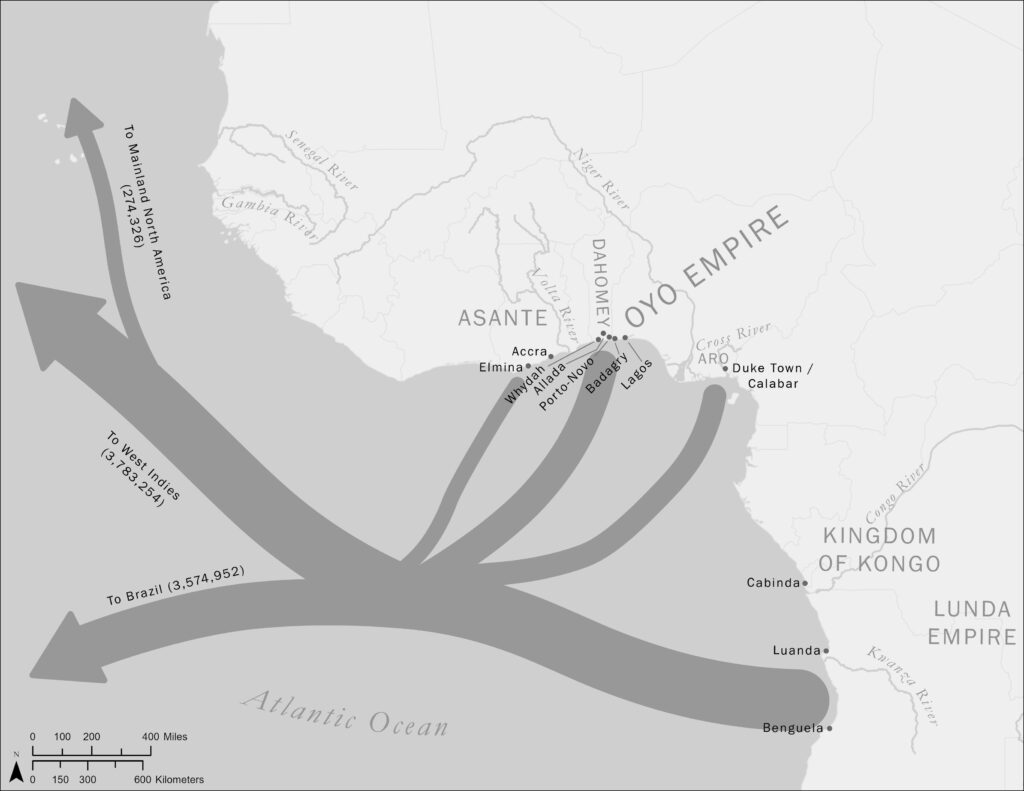
back to images & maps The Atlantic Slave Trade went on for over 350 years. It grew to monstrous proportions in the eighteenth and into the nineteenth centuries. Most enslaved people went to Brazil and the West Indies, as this map demonstrates. As research continues, we are developing an ever more detailed understanding of the […]
Ch4.3. Duke Town
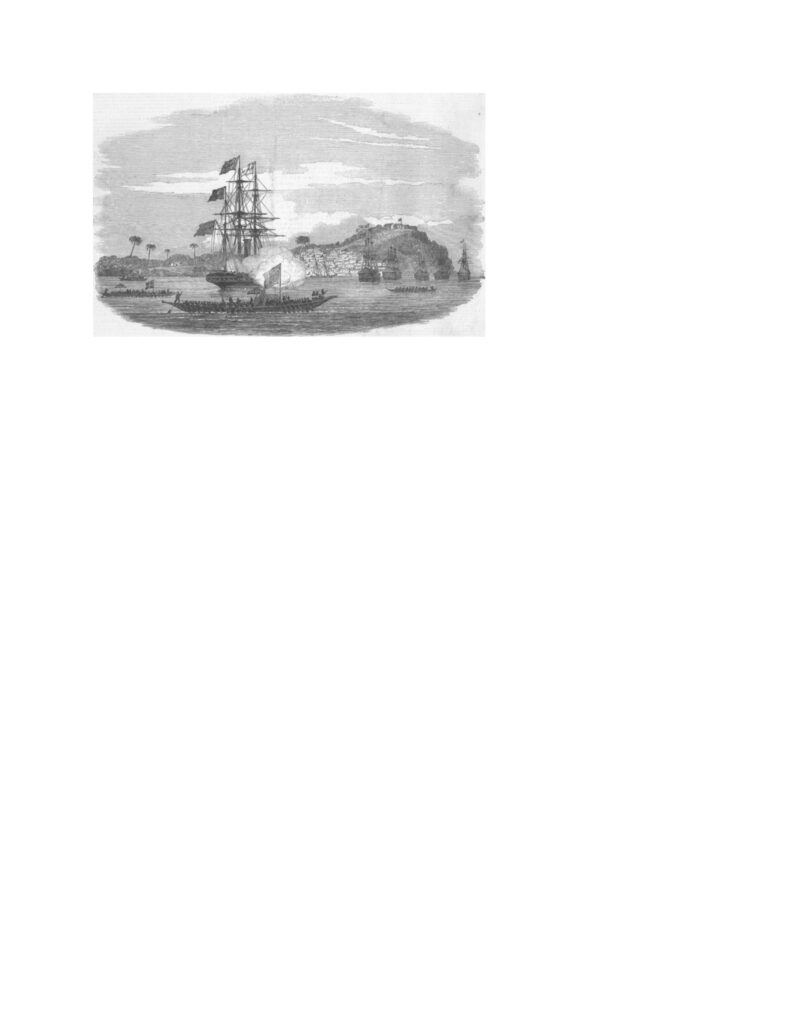
back to images & maps Duke Town, with Old Calabar, 1850. This image comes not from the era of the Atlantic slave trade, which the British had abolished in the early part of the nineteenth century, but from the beginning of the age of European imperialism. Note the variety of African and European vessels. In […]
Ch4.5. Nkisi figure
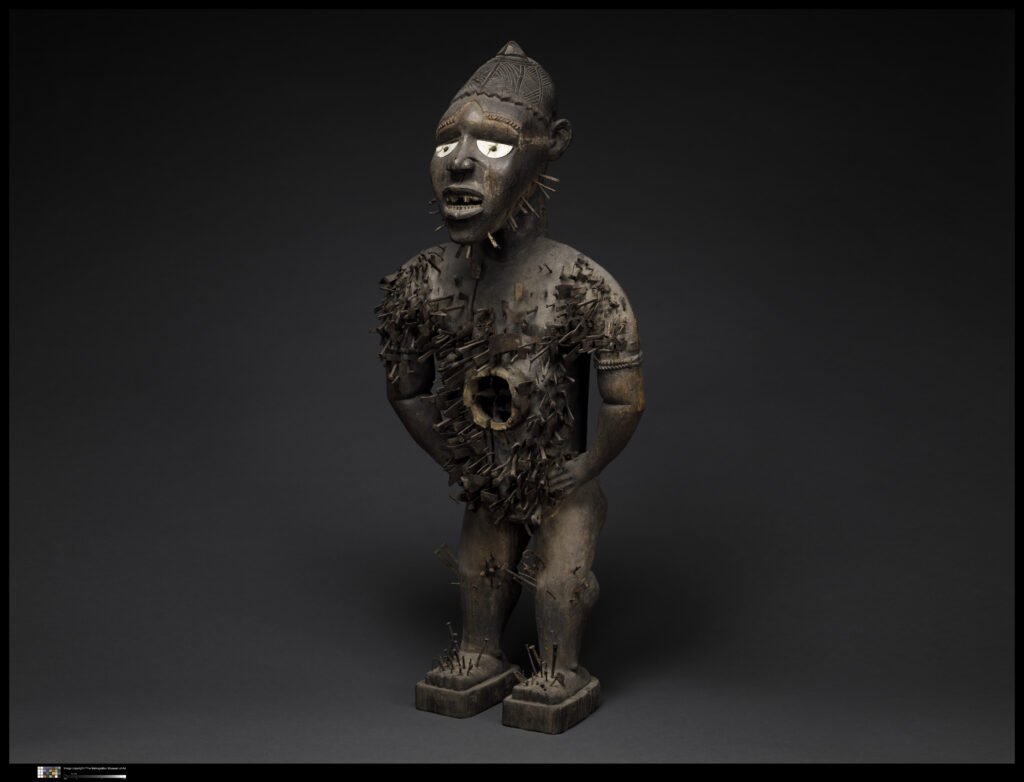
back to images & maps Ch4.5. Nkisi figure Nkisi figure, Kongo. Metropolitan Art Museum. Europeans considered sculptures like these “fetishes”; often they destroyed them. Many, however, have survived. Nkisi generally offered people protection from evildoers. Their makers empowered the sculptures by driving nails into the wood and pressing substances into cavities. Doing so “hid” power […]
Ch4.4. King Duke
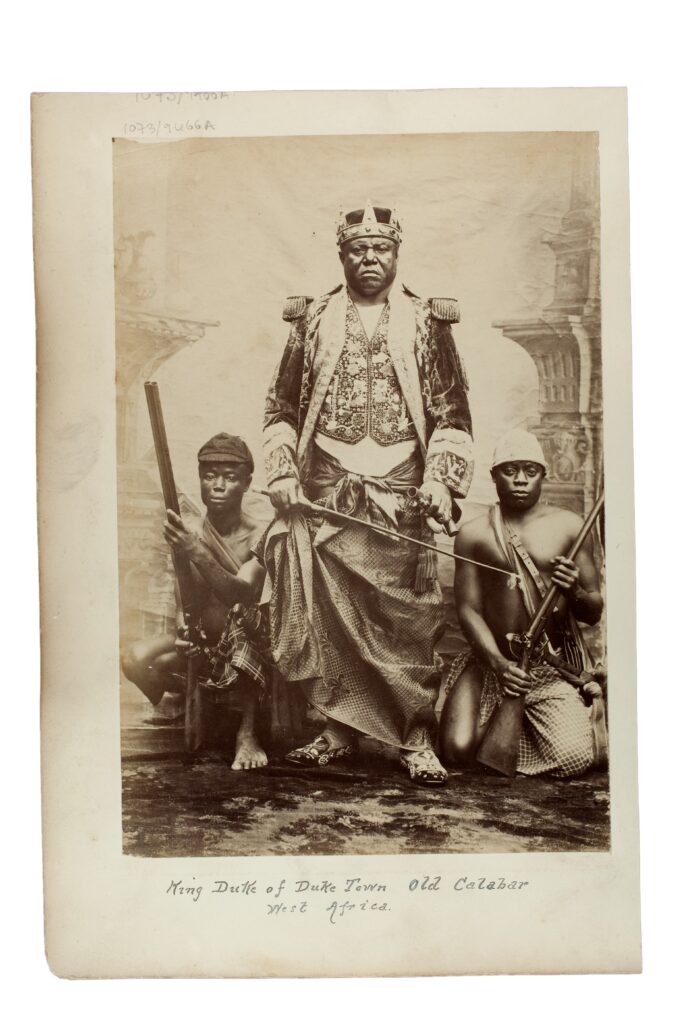
back to images & maps Ch4.4. King Duke King Duke, Old Calabar, ca. 1890. Private Collection. The eighteenth century and throughout much of the nineteenth century was the age of warlords. There was a proliferation of these historical figures along the West African coast in the era of the Atlantic slave trade. Some prospered, even […]
Ch4.2. William Corrantee
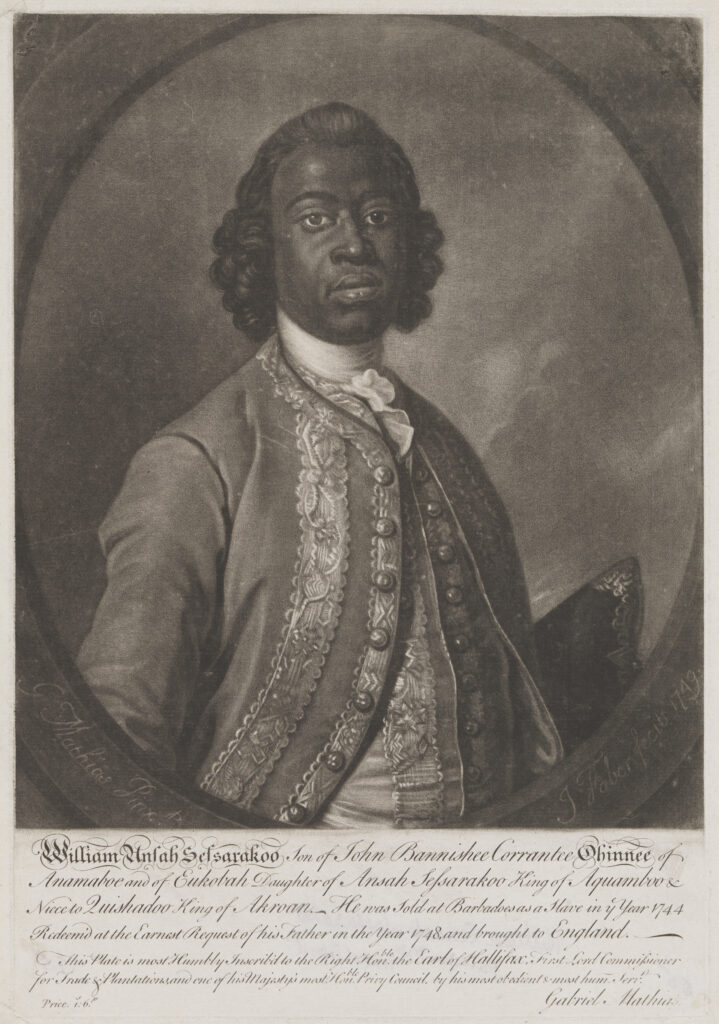
back to images & maps Ch4.2. William Corrantee William Corrantee The eighteenth century and throughout much of the nineteenth century was the age of warlords. There was a proliferation of these historical figures along the West African coast in the era of the Atlantic slave trade. Some prospered, even if their lives were often uncertain. […]
Ch4.1. “Seh-Dong-Hong-Beh”
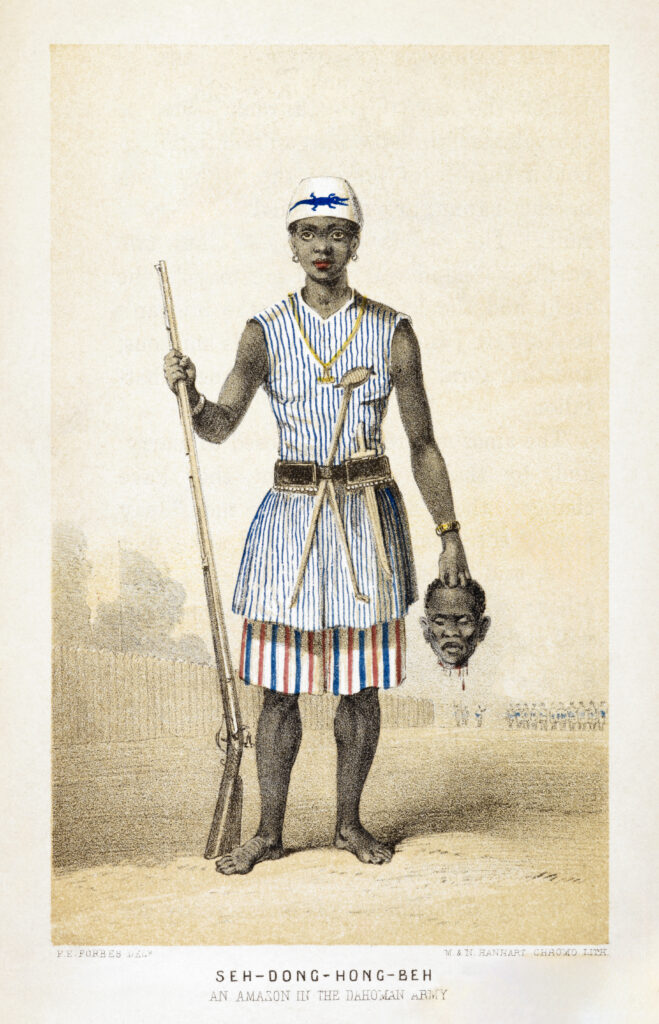
back to images & maps Ch4.1. “Seh-Dong-Hong-Beh” Ch4.1. “Seh-Dong-Hong-Beh.” Amazon Warrior from Dahomey. British Library. The so-called “Amazons” from the Kingdom of Dahomey are one of the few examples of a mostly female fighting force. Many were slaves or former slaves, not serving the Dahoman king. While we do not have the exact dates of […]