 Skip to content
Ch4.4. King Duke
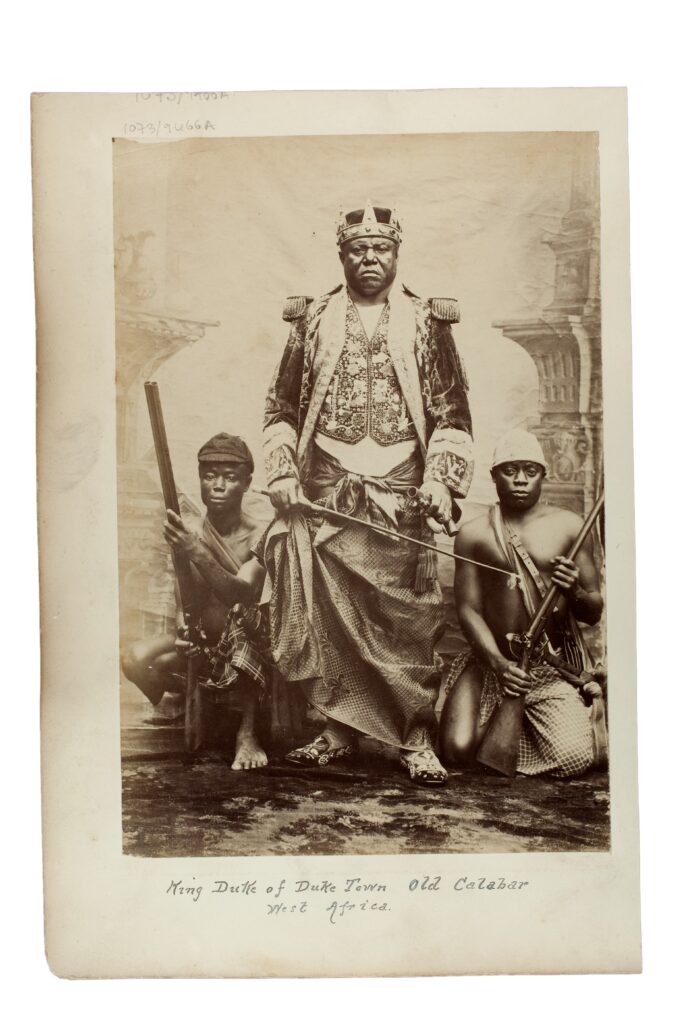
back to images & maps Ch4.4. King Duke King Duke, Old Calabar, ca. 1890. Private Collection. The eighteenth century and throughout much of the nineteenth century was the age of warlords. There was a proliferation of these historical figures along the West African coast in the era of the Atlantic slave trade. Some prospered, even […]
Ch4.2. William Corrantee
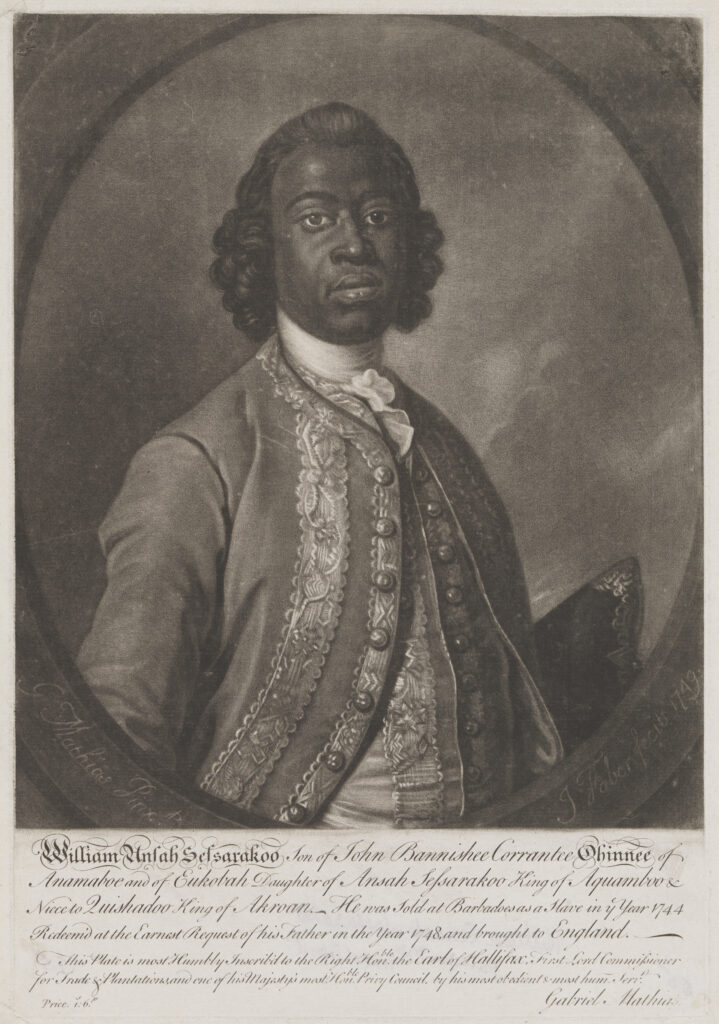
back to images & maps Ch4.2. William Corrantee William Corrantee The eighteenth century and throughout much of the nineteenth century was the age of warlords. There was a proliferation of these historical figures along the West African coast in the era of the Atlantic slave trade. Some prospered, even if their lives were often uncertain. […]
Ch4.1. “Seh-Dong-Hong-Beh”
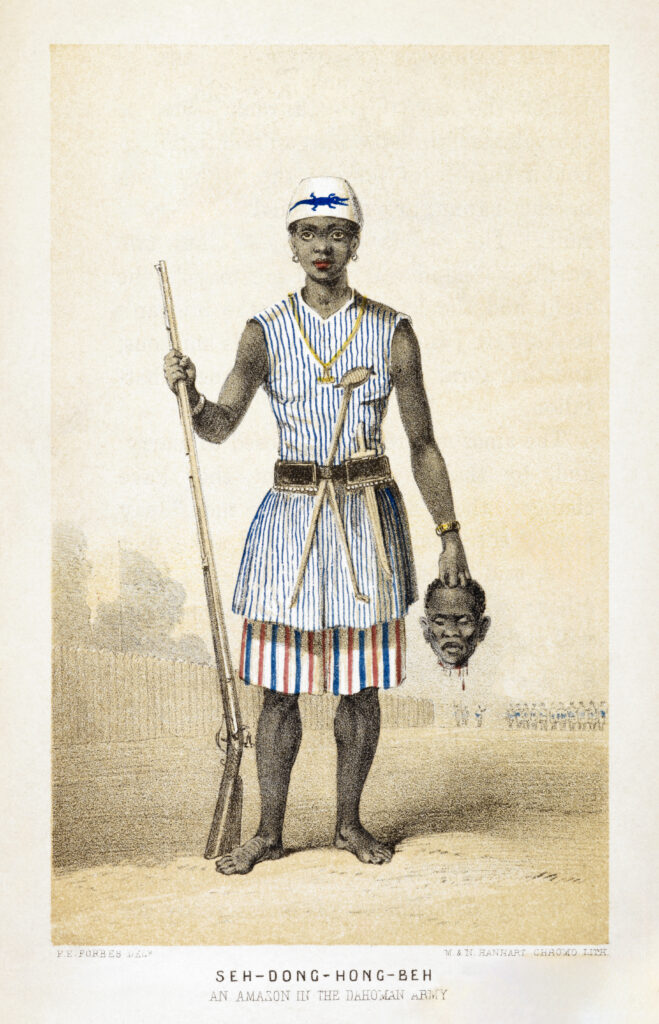
back to images & maps Ch4.1. “Seh-Dong-Hong-Beh” Ch4.1. “Seh-Dong-Hong-Beh.” Amazon Warrior from Dahomey. British Library. The so-called “Amazons” from the Kingdom of Dahomey are one of the few examples of a mostly female fighting force. Many were slaves or former slaves, not serving the Dahoman king. While we do not have the exact dates of […]
Ch 2.2. Funerary screen with European ship
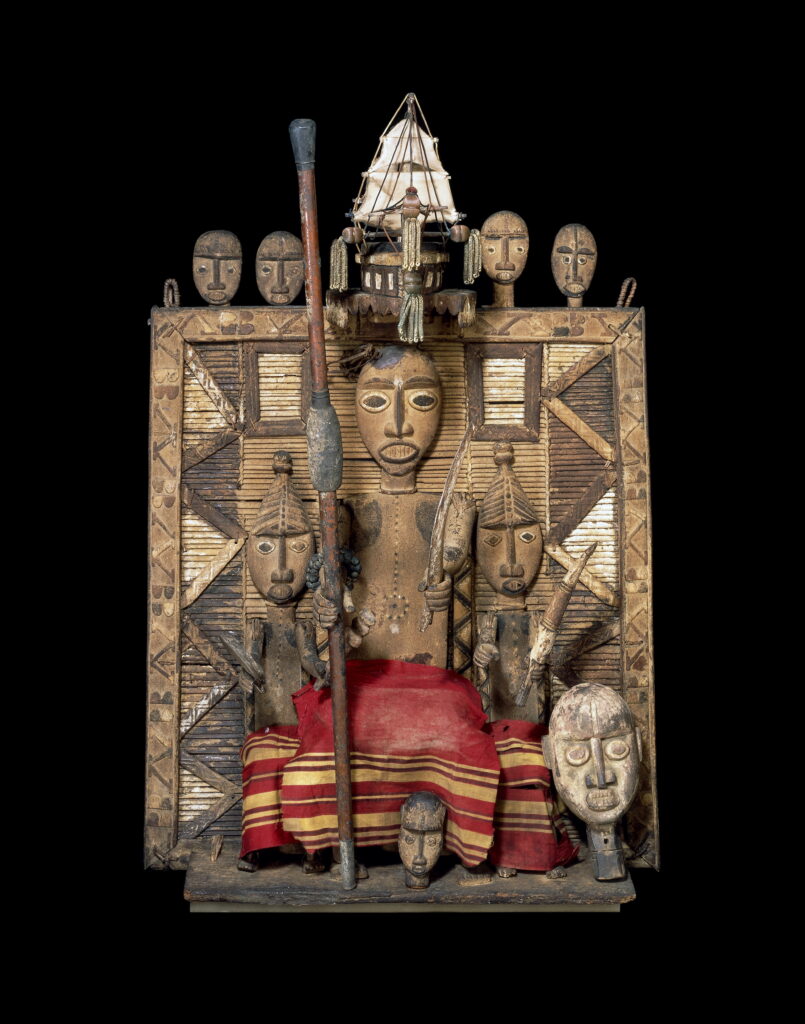
back to images & maps Ch2.2. Funerary screen with European ship Funerary screen with European ship, Kalabari, nineteenth century, Nigeria. Europeans brought fantastic and fantastical goods to Africa’s shores. Imagine the holds of their ships filled with bolts of cotton, beaver felt, silk, porcelain, alcohol, and weapons, to name just a few. These goods profoundly […]
Ch 1.5 Dyak musket ball holder
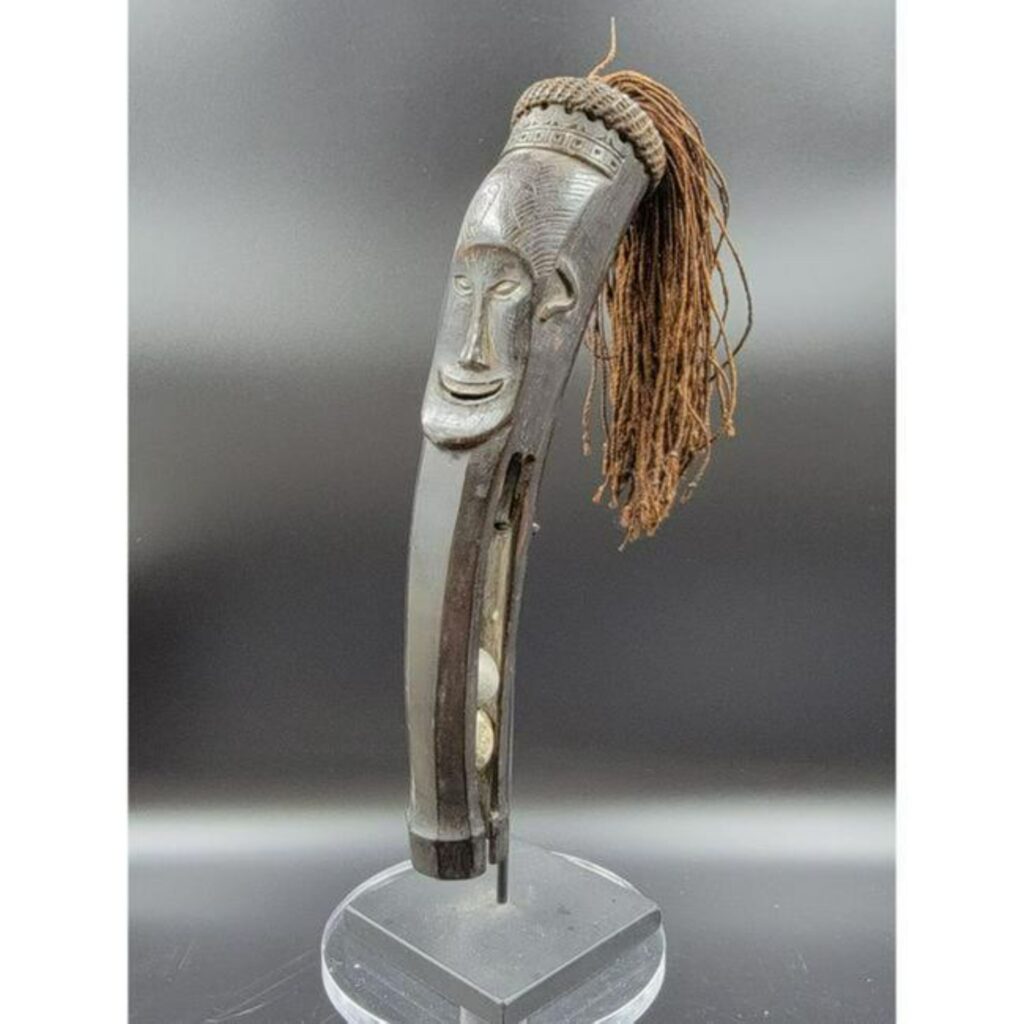
back to images & maps Ch1.5. Dyak musket ball holder Dyak musket ball holder Everywhere, indigenous peoples incorporated Western arms into their arts and crafts. The adoption of guns was a revolutionary development, and for many peoples they possessed magical powers. In this image, you can clearly see two musket balls.
Ch 1.4 East India Dock
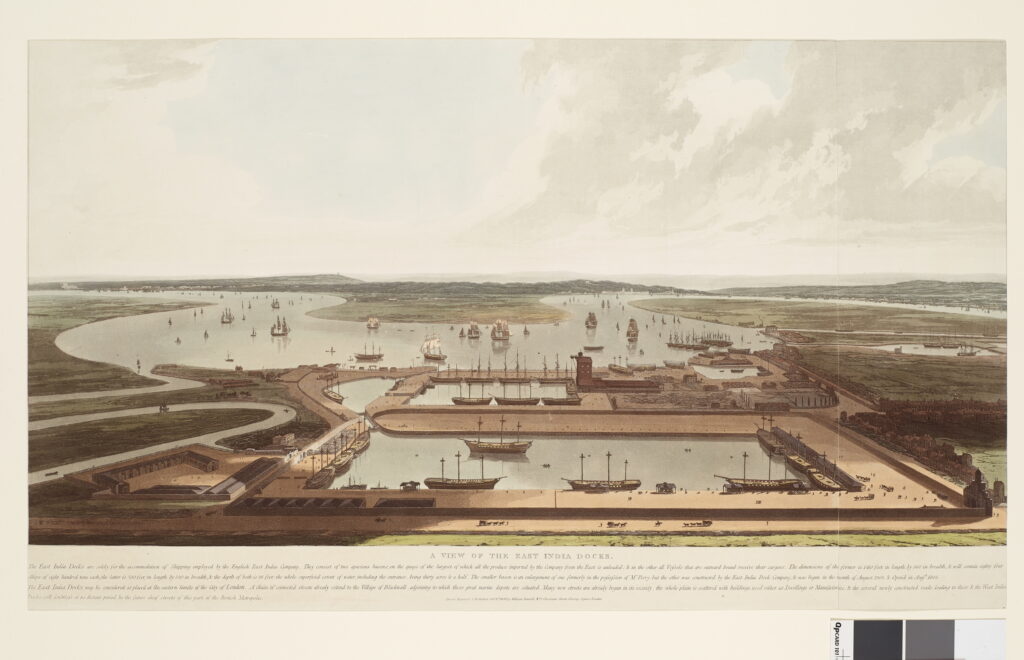
back to images & maps Ch1.4. East India Dock. East India Dock. London was the “capital of capital,” and much of this was related to volume of goods moving up the Thames. Shipping required dockage as well as the more mundane work of simply regulating river traffic. Building the East India Docks was a major […]
Ch 1.2 “Ruins of Ratcliffe”
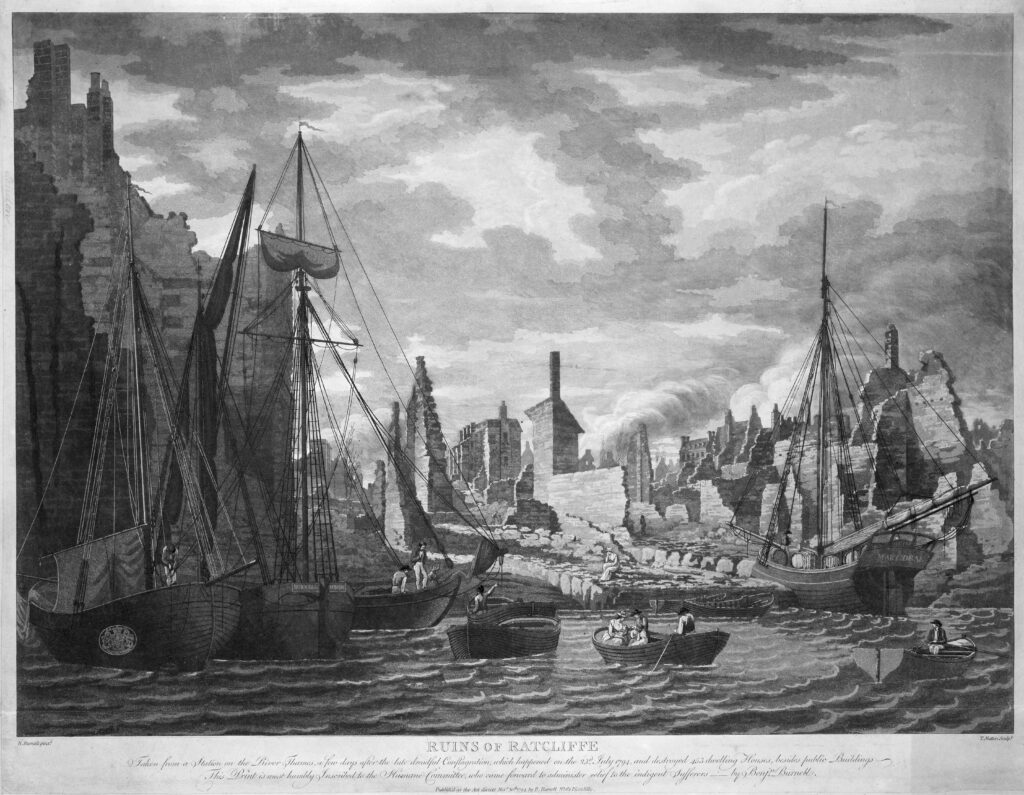
back to images & maps Ch1.2. “Ruins of Ratcliffe” “Ruins of Ratcliffe,” 1794. British Library. Saltpetre (saltpeter), or potassium nitrate, is a white crystal that easily dissolves in water. It has a wide range of industrial uses, but it is most famous for being the primary component of gunpowder. Saltpetre is highly combustible, which means […]